
Traditional SMS and MMS have been useful for many years. Reports show that SMS messages have a very high open rate, close to 98%. Also, MMS messages can increase customer opt-in rates by around 20% compared to SMS. Because of these strong results, businesses now want better and more advanced messaging options to meet modern customer expectations.
The answer is RCS messaging (Rich Communication Services).
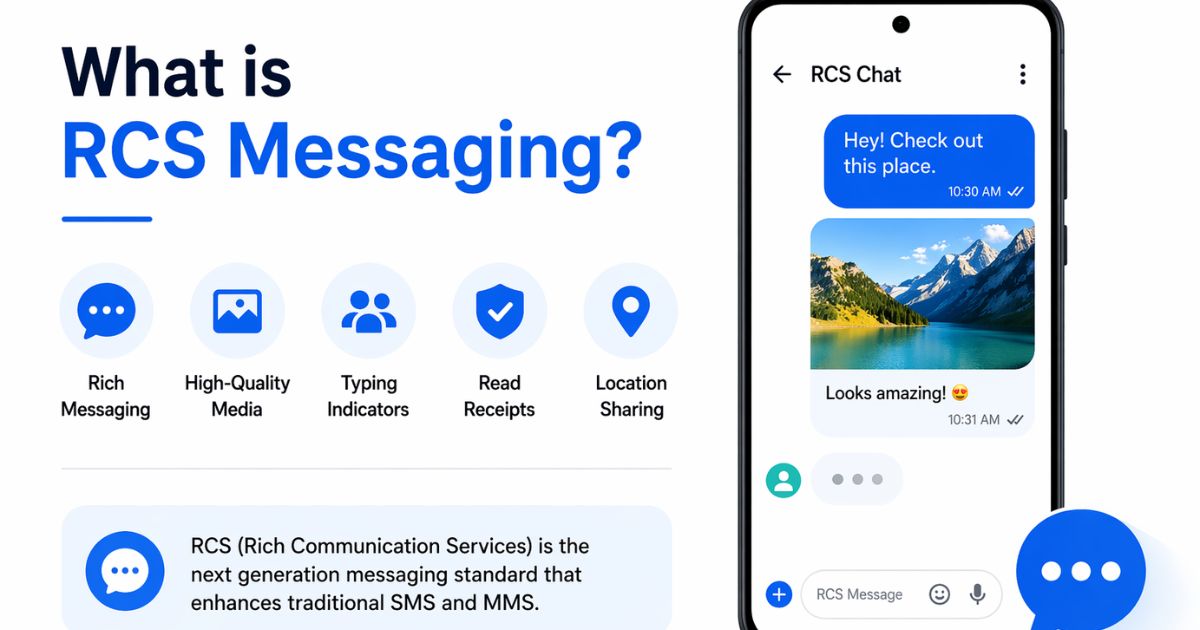
RCS is a modern upgrade to traditional mobile messaging. It offers advanced features like branded sender names, rich media content, and interactive elements. These include:
- Scrollable image carousels
- Quick reply buttons
- Call-to-action (CTA) buttons
- High-quality images and videos
- Real-time typing indicators
- Read receipts
These features create a smoother, more engaging, and app-like messaging experience for users.
So, what does this mean for your business?
Using RCS messaging allows businesses to connect with customers in a more personal and interactive way. It helps improve customer engagement, build trust, and deliver better communication experiences. As RCS continues to grow as a key communication channel, businesses that adopt it early can attract and retain the next generation of customers.
In this article, we will explain what RCS messaging is, how it is different from SMS and MMS, and why it is becoming essential for businesses that want to improve customer engagement and communication.
What is an RCS Message?
RCS (Rich Communication Services) is an advanced messaging technology that allows users to send rich and interactive messages. Like traditional SMS, RCS messages can be sent between individuals (person-to-person) or between businesses and customers (application-to-person).
One of the biggest advantages of RCS is that it works inside the phone’s default messaging app. Users do not need to install third-party apps like WhatsApp or Messenger. This makes communication simple, easy, and more accessible.
Here are some of the key features of RCS messaging:
- Company branding and verification
Businesses can display their brand name, logo, tagline, and a verified badge. This helps customers quickly recognize and trust the sender. - Enhanced media support
RCS allows you to send high-quality images, videos, GIFs, and large files. This is much better than the limited media support in SMS and MMS. - Interactive elements
RCS messages can include engaging features such as:- Quick reply buttons
- Call-to-action (CTA) buttons
- Image carousels
- Clickable links
- Suggested responses for faster interaction
- Longer messages
Unlike SMS, which usually has a 160-character limit, RCS supports longer messages without breaking them into multiple parts. - Better security and encryption
RCS Business Messaging offers improved security with encryption layers. This helps protect user data and ensures safer communication. - Real-time engagement features
- Read receipts
- Typing indicators
- Delivery status updates
What makes RCS truly powerful is how smoothly it fits into the existing mobile messaging system. Users receive RCS messages just like regular texts, without creating new accounts or downloading new apps.
For businesses, this means reaching customers on a platform they already use and trust. It eliminates app fatigue and makes communication more effective, direct, and user-friendly.
The History and Evolution of RCS Messaging
RCS messaging was first introduced in 2007 as an upgrade to the traditional SMS system, which had not changed much since the 1990s. It was developed by the GSM Association (GSMA) along with mobile network operators. The goal was to create a more interactive and media-rich messaging experience compared to SMS and MMS.
In the early years, RCS adoption was slow. There were several challenges, such as limited carrier support, technical issues, and strong competition from apps like WhatsApp that already offered advanced messaging features over the internet.
A major turning point came in 2016 when Google integrated RCS into its Android Messages app. Since Android devices are widely used across the world, this move helped increase awareness and adoption of RCS messaging.
To make RCS more consistent, the GSMA introduced a universal standard. This ensured that RCS messages would work smoothly across different mobile networks, devices, and regions. It also made the experience more reliable for both users and businesses.
After 2016, many mobile carriers, especially in the United States, started supporting RCS. Gradually, international carriers also began adopting it, expanding its global reach.
A recent and important milestone is the introduction of RCS support in iOS 18 by Apple. This update helps bridge the gap between Android and iPhone users, making cross-platform messaging more seamless.
Today, RCS is moving closer to becoming the global standard for messaging. With continued support from major tech companies and mobile operators, it is set to transform how businesses and consumers communicate.
RCS Messaging on Android and iPhone
RCS is fully supported on Android devices. Most modern Android smartphones and major mobile carriers already support RCS, allowing users to enjoy advanced messaging features directly in their default messaging app.
The RCS ecosystem has now become more inclusive. Apple, which is known for its closed messaging system, introduced RCS support with iOS 18. This update improves communication between Android and iPhone users and helps make RCS a more universal messaging standard.
RCS vs. SMS vs. MMS vs. OTT: A Brief Rundown
To better understand the value of RCS messaging, let’s compare it with other popular messaging technologies.
- Rich Communication Services (RCS)
RCS is an upgraded version of SMS and MMS. It supports modern features like:- Read receipts
- Typing indicators
- High-quality images and videos
- Interactive buttons and carousels
- Branded business messaging
- Location sharing
- Short Message Service (SMS)
SMS is the most basic form of text messaging. It allows messages up to 160 characters and works on all mobile phones. However, it does not support rich media or interactive features. - Multimedia Messaging Service (MMS)
MMS allows users to send images, audio, and videos. It supports longer messages than SMS but still has limitations in quality and interactivity. - Over-The-Top (OTT) Messaging
OTT services work over the internet instead of mobile networks. Popular examples include WhatsApp and Facebook Messenger. These platforms offer features like end-to-end encryption, voice/video calls, and file sharing.
Although each messaging type serves a purpose, RCS stands out by combining the wide reach of SMS and MMS with the rich features of OTT apps—all without requiring users to install a separate application.
RCS is powerful, but it may not fully replace SMS. RCS needs an internet connection (WiFi or mobile data) to work. On the other hand, SMS works without the internet. That is why SMS will still act as a backup when data is not available.
Who Can Send RCS Messages?
Any user who can receive RCS messages can also send them. The upgrade from SMS to RCS usually happens automatically in the background, improving the messaging experience without extra effort.
For businesses, sending RCS messages (A2P messaging) requires a communication platform like Twilio. Such platforms allow businesses to send rich, interactive messages using existing APIs without needing to rebuild their systems.
As RCS continues to expand worldwide, more mobile carriers and regions are supporting it. This growth is helping businesses reach more customers through a modern, engaging, and trusted messaging channel.
Where Can Businesses Start Using RCS Messaging?
As mentioned earlier, RCS messaging is expanding globally, especially with the introduction of support in iOS 18 by Apple. However, this does not mean that business messaging (A2P) is available in every country yet.
RCS adoption is happening at different speeds. While person-to-person (P2P) messaging is widely available, business-to-customer (A2P) messaging is rolling out more slowly. Some countries, such as Brazil and the United Kingdom, already support A2P RCS messaging. Others, like the United States, are still in the process of adopting it.
So, why isn’t A2P RCS available everywhere yet?
The main reason is security and trust. As new messaging channels grow—like WhatsApp and Facebook Messenger—there is also a higher risk of spam and misuse. Mobile carriers want to ensure that RCS remains a safe and trusted communication channel before fully enabling it worldwide.
Because of this, global rollout is being done carefully and step by step.
- Carriers are testing systems to prevent spam
- Strong verification processes are being implemented
- User trust and data protection are being prioritized
- Messaging standards are being refined across networks
As of late 2024, around 17 countries have introduced A2P RCS messaging, and this number is steadily increasing.
The Future of RCS Messaging
So, what lies ahead for RCS messaging?
Even though global A2P availability is still growing, businesses should start preparing their RCS strategy now. Early adoption can give you a strong competitive advantage.
Here’s what businesses can expect from the future of RCS:
- Better customer engagement through interactive and rich messages
- Higher conversion rates with CTA buttons and quick replies
- Improved brand trust using verified sender profiles
- Seamless communication without requiring third-party apps
- Stronger personalization using customer data and behavior
Business use cases to consider:
- Marketing campaigns with rich media and offers
- Customer support with quick reply options
- Order confirmations and delivery updates
- Appointment reminders and alerts
- Feedback collection and surveys
Tips to build your RCS strategy:
- Start by identifying key customer touchpoints
- Focus on personalized and relevant messaging
- Use interactive elements to boost engagement
- Ensure compliance with privacy and messaging regulations
- Test campaigns and optimize performance regularly
RCS is quickly becoming the next big step in mobile communication. Businesses that plan early and adopt smart strategies will be better positioned to connect with modern, tech-savvy customers.
Benefits of RCS Messaging for Business
As RCS continues to transform business communication, it offers several powerful advantages. Becoming a verified sender helps build trust and credibility with your customers. Let’s explore the key benefits of RCS messaging.
1. Enhanced Branding and Trust
RCS allows businesses to send messages with their brand name, logo, and verified profile. This creates a professional and secure experience for customers.
- Builds strong brand identity
- Increases customer trust and confidence
- Reduces chances of fraud or spam confusion
- Makes messages feel more personal
2. Increased Customer Engagement
RCS improves communication by adding rich media and interactive elements that make conversations more engaging.
- Quick reply buttons for fast responses
- Interactive carousels for product display
- High-quality images and videos
- CTA (Call-to-Action) buttons for instant action
- Personalized messaging experience
3. Boosted Read and Response Rates
Because RCS messages are visually appealing and interactive, customers are more likely to open and respond to them.
- Higher open rates than traditional SMS
- Faster customer replies
- Improved conversion rates
- Better customer satisfaction
- More effective marketing campaigns
4. Elevated Analytics and Insights
RCS provides detailed tracking features that help businesses measure performance and improve strategies.
- Delivery and read receipts
- Customer interaction tracking
- Campaign performance analysis
- Data-driven decision making
- Better understanding of customer behavior
With platforms like Twilio, businesses can monitor messaging performance using advanced tools such as messaging logs and insights dashboards.
5. Uninterrupted Customer Experience
RCS works within the user’s default messaging app, so customers don’t need to download anything new.
- No extra apps required
- Seamless and familiar experience
- Higher adoption rates
- Smooth customer journey
- Reduced friction in communication
6. Financial Returns and Cost Savings
RCS helps businesses save costs while improving results by combining communication and transactions in one place.
- Better cost per engagement
- Reduced customer acquisition costs
- Increased customer lifetime value
- Ability to handle large-scale interactions
- Less need for additional support staff
Customers can complete actions like browsing, selecting, and purchasing—all within a single conversation. This improves efficiency and boosts overall ROI.
As RCS adoption grows, businesses that start early can gain a strong competitive edge. It provides a smart, modern way to connect with customers, improve engagement, and drive better business results.
RCS Messaging Use Cases for Business
There are many ways businesses can use RCS messaging to improve communication and drive better results. Let’s explore some powerful and practical use cases.
Enhanced Customer Service
RCS enables a more interactive and efficient customer support experience.
- Customers can send images or videos of issues
- Businesses can reply with video tutorials or guides
- Quick reply buttons speed up communication
- Typing indicators and read receipts improve transparency
- Easy appointment booking within chat
For example, a customer can share a product issue, receive step-by-step help, and book a service—all in one conversation.
Promotional Campaigns and Offers
RCS makes marketing campaigns more engaging and visually attractive.
- Send high-quality product images
- Use carousel sliders to showcase multiple products
- Include QR codes and videos
- Add CTA buttons like “Buy Now” or “Shop Now.”
- Share limited-time offers and discounts
This helps businesses move beyond simple SMS and create interactive promotions.
Personalized Recommendations
RCS allows businesses to deliver tailored experiences based on customer data.
- Recommend products based on purchase history
- Suggest items based on browsing behavior
- Share personalized deals and offers
- Provide style or usage tips
- Improve customer satisfaction with relevant content
For example, a clothing brand can suggest outfits based on previous purchases.
Real-Time Updates
RCS is perfect for sending instant updates and notifications.
- Order confirmations and delivery tracking
- Appointment reminders and rescheduling
- Live updates through chatbots or agents
- Clickable tracking links
- Instant customer support responses
Customers can track orders or manage appointments directly within the chat.
Event Reminders and Updates
Businesses hosting events can use RCS for better communication.
- Send event reminders and schedules
- Share location links using maps
- Provide speaker details or agendas
- Send real-time updates or changes
- Offer digital tickets or check-in options
This ensures attendees stay informed and engaged.
Customer Feedback and Surveys
RCS makes collecting feedback easier and more interactive.
- Send post-purchase surveys
- Use star ratings or emoji feedback
- Add quick response options
- Include images or videos in surveys
- Increase response rates with interactive formats
For example, customers can rate their experience directly in the message.
RCS gives businesses a powerful way to improve customer experience and communication. With rich and interactive messaging, companies can increase engagement and drive higher conversions.
Tips for Creating an RCS Messaging Strategy
Building a successful RCS strategy requires careful planning. Here are six essential tips:
1. Understand Your Audience
Know your customers and their needs.
- Use customer data for insights
- Segment audiences based on behavior
- Personalize messages for each group
- Target new and returning customers differently
- Focus on solving customer problems
2. Create Engaging Content
Use RCS features to deliver attractive and interactive content.
- Add high-quality images and videos
- Use carousels for product display
- Include quick reply and CTA buttons
- Add links to helpful resources
- Keep content simple and clear
3. Use Inspiration from Past Campaigns
Build on what already works.
- Improve successful SMS or email campaigns
- Add rich media for better performance
- Maintain consistent brand voice
- Align RCS with the overall marketing strategy
- Repurpose high-performing content
4. Focus on Customer Experience
Make every interaction smooth and user-friendly.
- Use natural conversational flows
- Combine AI chatbots with human support
- Provide quick and helpful responses
- Reduce steps for customer actions
- Ensure seamless navigation within chat
5. Analyze and Optimize
Track performance and improve continuously.
- Monitor open and click-through rates
- Track conversions and engagement
- Run A/B tests for better results
- Optimize message timing and format
- Use insights to refine campaigns
6. Ensure Compliance and Security
Protect customer data and follow regulations.
- Get clear customer consent (opt-in)
- Provide easy opt-out options
- Follow data privacy laws
- Use secure messaging practices
- Protect sensitive customer information
By following these strategies, businesses can fully leverage RCS messaging to boost engagement, improve customer relationships, and increase sales.
Related: How to write a business greeting message
RCS Messaging Strategy Example
Let’s look at a simple example of how a business can apply an RCS messaging strategy using the tips above.
Imagine you run an online clothing store and are launching a new women’s clothing collection. Here’s how you can implement RCS effectively:
- Understand your audience
Use customer data to identify users interested in women’s fashion. Then divide them into groups:- Frequent buyers
- Occasional buyers
- New customers
This helps you send more relevant and targeted messages.
- Create engaging content
Design rich and interactive content to showcase your products:- High-quality product images
- Videos of models wearing outfits
- Carousel sliders to display multiple items
- Style guides and outfit ideas
- Use inspiration from past campaigns
Review previous campaigns to see what worked best.- Reuse high-performing video formats
- Improve past content with RCS features
- Focus on proven marketing styles
- Focus on customer experience
Make the buying journey smooth and simple:- Add quick-reply buttons like “View Details” or “Buy Now.”
- Reduce steps to complete a purchase
- Keep navigation easy within the chat
- Analyze and optimize
Track how your campaign performs and improve it:- Monitor engagement and click rates
- Test different content formats
- Adjust timing and messaging
- Improve based on customer behavior
- Compliance and security
Ensure your campaign follows rules and protects users:- Get user consent before messaging
- Provide an easy opt-out option like “STOP.”
- Follow privacy and data protection guidelines
This is a simple example of how businesses can use RCS to create powerful and engaging campaigns.
Q: Can RCS reduce customer support costs?
A: Yes, RCS can lower operational costs by simplifying communication. Features like quick replies, suggested actions, and rich media help resolve customer issues faster
Q: Is RCS compliant with privacy laws like GDPR and CCPA?
A: RCS supports secure messaging with encryption. However, businesses must still follow data privacy laws by ensuring:
- Clear customer consent (opt-in)
- Easy opt-out options
- Proper data handling practices
Q: How does RCS improve customer experience?
A: RCS enhances user experience by offering:
- Verified brand messaging
- Rich media content (videos, images)
- Interactive buttons and actions
- No need for additional apps
Q: How does RCS help businesses stand out?
A: RCS improves brand visibility by showing your company name, logo, and verified badge. It also allows you to showcase products using interactive and visual content.
Q: What rich media features does RCS support?
A: RCS supports a wide range of features, including:
- High-quality images and videos
- GIFs and audio files
- Scrollable carousels
- Quick reply buttons
- Call-to-action (CTA) buttons
- Longer messages without limits
Q: What are the challenges of using RCS?
A: Some challenges include:
- Requires internet connection (WiFi or mobile data)
- Need for SMS fallback
- Creating rich media content
- Optimizing campaigns for better performance
Q: How does RCS impact engagement rates?
A: RCS can significantly improve engagement and conversions. Interactive features and rich media make messages more appealing, leading to higher open, read, and response rates compared to traditional SMS.

I’m Aisha Babar, an SEO expert and content writer focused on ranking content that drives real traffic. I turn keywords into clear, engaging, and high-converting content.
1 thought on “What is RCS Messaging?”