
Whatever business you’re in, whether it is a small company or a large organisation, knowing how to write a professional and effective business greeting message can improve your career growth. A well-written greeting message shows professionalism, builds trust, and creates a strong first impression.
You may be a job seeker reaching out to new contacts on professional networking platforms, a business development executive looking for new clients, or someone who communicates regularly within a company. In all these situations, your business greeting message plays an important role in professional communication.
A good business greeting message should be clear, polite, and engaging. It helps you build strong relationships, improve business communication skills, and open the door to future opportunities. Whether you are writing an email, message, or formal introduction, using the right tone can make your communication more effective.
In this article, we explain how to write a business greeting message and share useful tips to help you maintain the right professional tone, improve workplace communication, and create a positive impression.
What is a business greeting message?
A business greeting message is a professional way of communication used in emails, formal letters, and even voicemails. It is usually the first part of a conversation and helps set the tone for the rest of the message.
This type of message is important in business communication because it creates a strong first impression. A well-written greeting message shows respect, professionalism, and clarity. It also helps in making your message more effective and easier to understand.
You can use a business greeting message in different situations, such as
How to write a business greeting message
Here are some practical tips to help you write a professional business greeting message that sets the right tone and creates a good first impression:
Determine the formality of the situation
The tone of your business greeting message depends on the recipient and the situation. In some cases, a simple “Hello” works well, while in formal communication, “Dear” is more suitable.
Think about your purpose before writing. If you are reconnecting with someone you already know, you can use a slightly friendly tone. However, when reaching out to a new client, employer, or business contact, it is better to start with a formal approach. You can adjust the tone later once a professional relationship is established.
Use the recipient’s name
Using the recipient’s name makes your message more personal and engaging. It shows effort and respect. If possible, include their job title for a more professional touch.
If you don’t know the name, you can:
- Search on the company website or LinkedIn
- Contact the company for the correct details
- Use general greetings like “Sir/Madam” or “To Whom It May Concern.”
Be concise and stay to the point
Business messages should be clear and short. Most professionals prefer quick communication, so avoid adding unnecessary details.
Make sure to:
- State your purpose at the beginning
- Keep sentences simple and direct
- Avoid long paragraphs
- Focus only on relevant information
- Respect the reader’s time
Keep it professional
Always maintain a professional tone, even if you are familiar with the recipient. Your message represents your communication skills and attitude.
Follow these tips to stay professional:
- Use proper closing phrases like “Regards” or “Yours sincerely.”
- Check grammar and spelling before sending
- Avoid slang or casual language
- Plan your message before writing or calling
- Use tools like spell check for error-free communication
A well-written business greeting message helps you create a strong first impression and build better professional relationships.
Why is personalisation important in a business greeting message?
Personalisation in a business greeting message helps you build a strong connection with the recipient. When you address someone by their name and mention something relevant about them or their company, it shows effort and genuine interest.
This creates a positive first impression and makes your message stand out. It also increases the chances of getting a reply because the recipient feels valued and understood.
Key benefits of personalisation:
- Builds trust and credibility
- Makes your message more engaging
- Shows professionalism and research
- Encourages better communication
- Helps create long-term business relationships
How do I strike a balance between formality and warmth?
Balancing formality and warmth is important for effective business communication. Your message should sound respectful but also friendly and human.
Start with a formal tone, especially when writing to someone senior or unfamiliar. Use proper titles like “Dear Mr. Smith” or “Dear Ms. Khan.” Once the conversation progresses, you can adjust your tone slightly to be more relaxed.
Ways to maintain balance:
- Use polite and respectful language
- Avoid overly casual words or slang
- Add a friendly sentence to show interest
- Mention achievements or recent work
- Keep your tone professional yet approachable
This balance helps you appear confident, respectful, and easy to communicate with.
Why is it important to check for errors before sending a business greeting message?
Checking your message for errors is essential because it reflects your professionalism. Even small spelling or grammar mistakes can leave a negative impression.
A well-written message shows that you pay attention to detail and take your communication seriously. It also ensures that your message is clear and easy to understand.
Before sending, always:
- Proofread for spelling and grammar mistakes
- Check sentence clarity and structure
- Ensure the tone matches the situation
- Confirm names and details are correct
- Review the main purpose of your message
Error-free communication builds trust and strengthens your professional image.
Does the medium of the business message impact the greeting?
Yes, the platform or medium you use affects how you write your greeting. Each communication channel has its own style and level of formality.
For example, a formal business letter requires a structured, respectful tone, using titles such as “Mr.” or “Ms.” In contrast, emails may allow a slightly relaxed tone depending on your relationship with the recipient. Messages on professional platforms should mix professionalism with a conversational style.
Things to consider based on the medium:
- Business letters → formal and structured
- Emails → semi-formal and flexible
- Networking platforms → professional but friendly
- Messages or chats → short and clear
Always adjust your tone based on context, audience, and purpose to ensure effective communication.
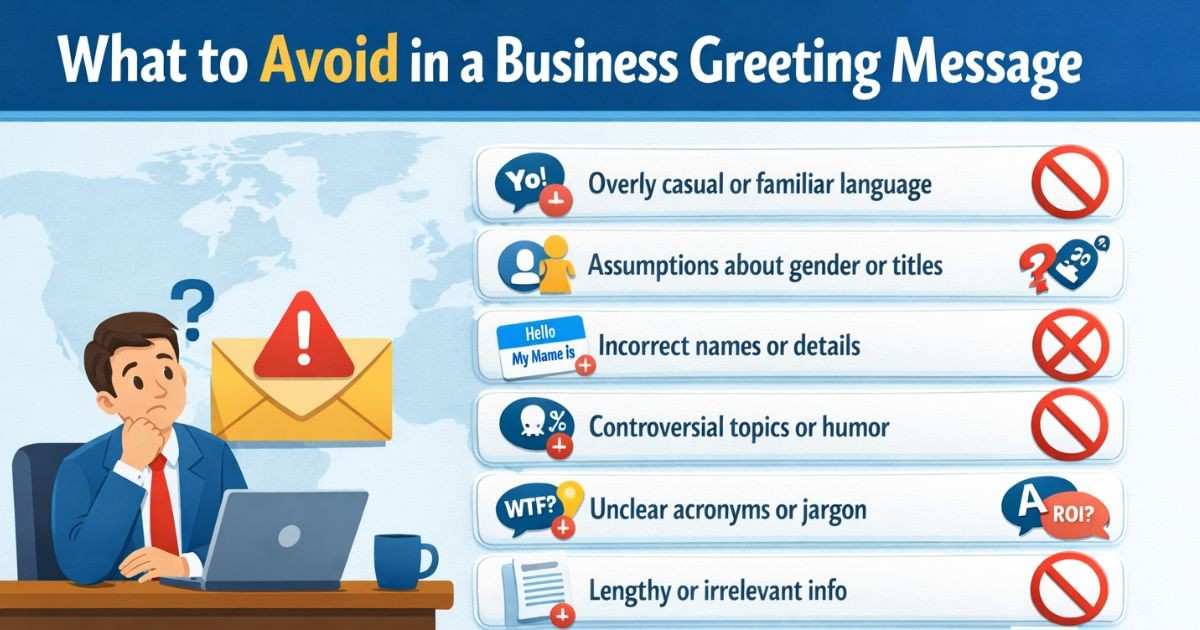
What should I avoid in a business greeting message?
When writing a business greeting message, it is important to avoid mistakes that can harm your professional image or create misunderstandings. Keeping your message clear, respectful, and appropriate will help you make a positive impression.
Here are some key things to avoid:
- Overly casual or familiar language
Avoid slang, informal words, or a tone that feels too friendly unless you already have a close professional relationship. - Making assumptions about the recipient
Do not guess someone’s gender, marital status, or title. Always use neutral and respectful language if you are unsure. - Using incorrect names or details
Double-check the recipient’s name, spelling, and position to avoid embarrassment. - Controversial topics or humor
Avoid sensitive subjects, strong opinions, or jokes that may not be understood or appreciated by everyone. - Unclear acronyms or jargon
Do not use abbreviations or industry terms that the recipient may not understand. Keep your language simple and clear. - Long and unnecessary information
Stay concise and focus only on the purpose of your message. Avoid adding unnecessary details. - Poor grammar and spelling errors
Mistakes can make your message look unprofessional. Always proofread before sending. - Unprofessional tone or closing
Avoid abrupt endings or inappropriate sign-offs. Always end with a polite and professional closing.
Related: How to Make a Message Card with Paper
FAQs
1. What is a business greeting message?
A business greeting message is a professional opening used in emails, letters, or messages to start communication politely and clearly.
2. How long should a business greeting message be?
It should be short and direct. Keep it clear, usually within a few lines, while stating your purpose quickly.
3. Can I use “Hello” in a business greeting?
Yes, “Hello” is acceptable in semi-formal situations. For formal messages, use “Dear” with the recipient’s name.
4. Why is tone important in business messages?
Tone reflects your professionalism. A proper tone helps build trust, respect, and strong business relationships.
5. Should I always use the recipient’s name?
Yes, whenever possible. Using the name personalizes the message and makes it more engaging and respectful.
Final Thoughts
A well-written business greeting message sets the foundation for effective communication. By keeping your tone professional, your message concise, and your approach personalized, you can create a strong first impression. Avoid common mistakes, focus on clarity, and always respect the recipient’s time. Small details in your greeting can make a big difference in building lasting professional relationships.

I’m Aisha Babar, an SEO expert and content writer focused on ranking content that drives real traffic. I turn keywords into clear, engaging, and high-converting content.
3 thoughts on “How to write a business greeting message”